Medical Tech 

Microneedle painlessly monitors drug levels without the need to draw blood

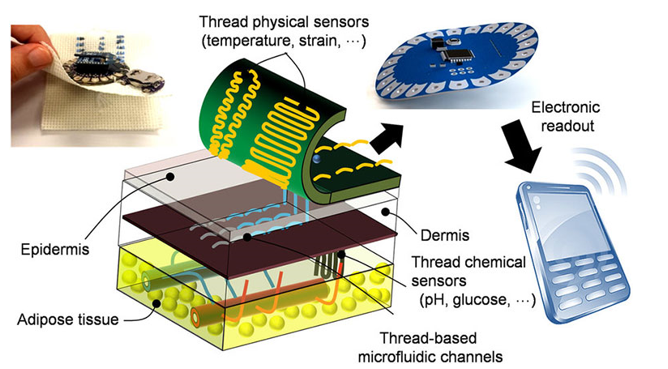
Microneedle technology has been around for years, and we’ve seen vaccines andmedication administered via the technique, which uses tiny needles to break only the upper layer of the patient’s skin. Now, the pain-free tech is being used for something a little different, with researchers creating a device capable of monitoring patient drug levels – something that usually requires the drawing of blood. The development of the new system was a joint effort between the University of British Columbia (UBC) and the Paul Scherrer Institute (PSI) in Switzerland. It consists of a small patch…

Read More
IT 

Quantum Computers are coming. The World Might Not Be Ready.

Quantum mechanics, Carl Sagan once observed, is so strange that “common sense is almost useless in approaching it.” Scientists still don’t understand exactly why matter behaves as it does at the quantum level. Yet they’re getting better at exploiting its peculiar dynamics — in ways that may soon upend the technology business. One of the most interesting applications is in computing. In theory, quantum computers could take advantage of odd subatomic interactions to solve certain problems far faster than a conventional machine could. Although a full-scale quantum computer is still…

Read More
Medical Tech 

uDISCO: A Novel Tissue Clearing Technique for Visualization of Central Nervous System

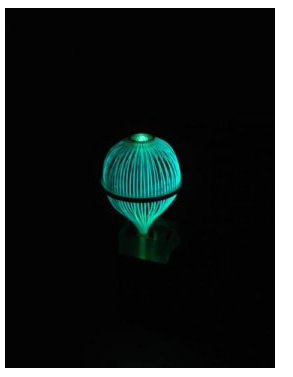
The three-dimensional nature of biological specimens poses a challenge to whole organ imaging, due to the obscuring effects of light scatter. Innovative tissue-clearing techniques, combined with advances in imaging of cleared tissue, have increasingly been under investigation as substitutes for histological methods. Researchers from Ludwig Maximilian University have established a novel tissue-clearing and whole-body imaging technique, named “ultimate DISCO” (uDISCO).   Tissue clearing and shrinkage (up to 65%) were achieved by exposure to a solvent, which eliminated water and fat content over the course of several days. Using this technique,…

Read More
IT 

Google’s Project Loon balloons to cover Sri Lanka with internet access

Bringing internet to remote regions by sending internet-enabled balloons into the stratosphere sure sounds like a wild idea, but it’s about to become a reality for the resident of Sri Lanka. The government of the island nation has just announced a partnership with Google that will bring affordable high-speed internet access to every inch of the country using the company’s Project Loonballoons. Project Loon wouldn’t really be at home anywhere other than the Google X lab, the company’s secretive research arm from which all manner of left-field ideas have emerged, including glucose-monitoring…

Read More
Transport Tech 

Next stop, the future: New York subway set for train and station upgrades

Life for commuters on New York’s subway system is set to get a little more comfortable, with the announcement that both its trains and stations are set for a revamp. The new subway cars will boast bigger doors for easier access, more standing space, Wi-Fi and USB charging ports. The updates to the trains and stations are part of the Metropolitan Transportation Authority’s (MTA) US$27 billion, five-year Capital Program to renew and expand its network and follow the installation of On The Go! touchscreen information kiosks. In total, 1,025 new subway…

Read More
IT 

Home PC outperforms a supercomputer in complex calculations

The GPU in your gaming rig performs crazy amounts of calculations to really bring to life the Cyberdemon in the new Doom, but scientists are increasingly applying that power to more academic pursuits. Russian physicists have put a computer running a consumer-level Nvidia GPU to work on equations that are normally performed using a powerful supercomputer, and found that the home PC solved them in 15 minutes – far faster than the supercomputer’s time of two or three days. A GPU is designed with multiple threads of processing power, which allows…

Read More
Other Tech 

Insect-Inspired Eyes Give Sight to Mini Drones

Buzzing may not be the only thing drones have in common with insects. Tiny drones of the future might “see” their world with tiny, artificial sensors inspired by flying insects’ compound eyes. The experimental sensors are small and light enough to fit on the tiniest drones, which could give them the ability to sense and avoid collisions in cluttered spaces. Smaller and Smaller Like most other gadgets, scientists are looking to make drones smaller and smaller for a number of reasons. For one, a tiny drone is far stealthier and…

Read More
Other Tech 

How Trucks Can Make Delivery Drones a Reality

Delivery drones may still seem a ways off because of new U.S. commercial drone regulations requiring drones to stay within sight of their human operators on the ground. But such rules pose no problem for a U.S. startup that developed a drone capable of launching from delivery trucks and dropping off packages within the driver’s line of sight. The HorseFly drone developed by Workhorse Group, an electric vehicle company in Cincinnati, Ohio, is an octocopter designed to ride aboard a delivery truck. Once it gets a delivery mission, the drone can take off through the truck’s roof with a…

Read More
Transport Tech 

It’s No Miracle Everyone Escaped That Fiery Dubai Plane Crash

Once the smoke had cleared from the runway at Dubai International Airport, you could see the wreckage of what you’d assume was an unsurvivable crash. The fuselage of the Boeing 777 was burnt and twisted. The entire top of the plane’s body melted away, down to the level of the windows, and what was visible of the interior was charred beyond recognition. How could anyone have escaped? Yet every one of the 300 people on board got out safely after the jet landed hard and caught fire Tuesday morning. (One…

Read More
Transport Tech 

HYDROGEN-POWERED TRAM DEVELOPED IN CHINA

In an effort to reduce China’s harmful and plentiful greenhouse gas emissions, Chinese companySifang (a subsidiary of China South Rail Corporation) has developed the world’s first hydrogen powered tram. The tram took two years of research and development to complete, and will be powered entirely by hydrogen fuel cells. Since this is a tram and not a train, the top speed will only be 70 kilometers per hour and it will be used in urban areas only. It is designed to carry 380 passengers. The tram will take 3 minutes to refuel and will have…

Read More