
The Chip Wars in Your Pocket
The Chip Wars in Your Pocket
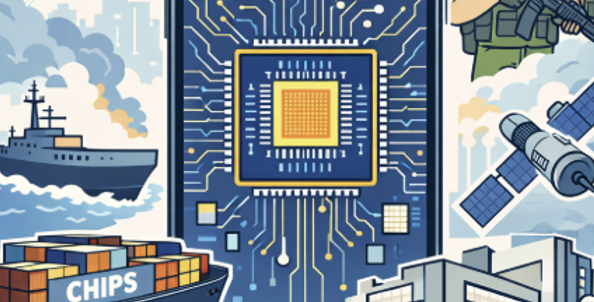
Most of us do not think about geography when we are scrolling through TikTok or checking our grades on Canvas, but the tiny chips inside our phones are currently the most contested objects on the planet. Almost every major diplomatic tension in the world right now can be traced back to semiconductors. They are essentially the “new oil” of our generation. Because a huge percentage of these high-end chips are manufactured in just one or two specific locations, the entire global economy is incredibly fragile.
If the supply chain for these tiny pieces of silicon ever snaps, our entire way of life pauses. There would be no new laptops for school and no GPS for your car. Even the servers that hold all your cloud data would eventually grind to a halt. It is a wild reminder that our digital freedom depends on very real and very physical pieces of hardware moving across dangerous waters every single day. We tend to think of the internet as something invisible and floating in the air, but it actually lives in small, physical boxes that countries are willing to go to war over.
The complexity of making these chips is also mind-blowing. You cannot just build a factory overnight. It takes billions of dollars and decades of specialized knowledge to print circuits that are smaller than a human virus. This means that whoever controls the “fabs” where these chips are made basically controls the future of artificial intelligence, space travel, and national security.
As students, we are the primary consumers of this tech, but we are often the least aware of where it comes from. Understanding the “Chip Wars” helps us see that our gadgets are not just toys. They are the frontline of a global power struggle. When you look at your phone, you are looking at the result of an incredibly complex and tense international balancing act that keeps the modern world running.
R. Zhang