Medical Tech 

Transparent skull implant set to ease laser brain surgery

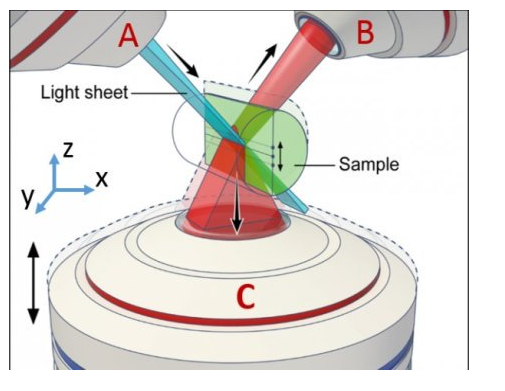
Researchers at the University of California – Riverside (UCR) report their progress with the new implant material in two recently published journal papers. Their aim is to develop a biocompatible “window to the brain” whereby surgeons will be able to direct laser therapy into patients’ brains on demand, without having to perform repeated craniotomies. Such a material could transform a risky, highly invasive operation into a less risky, minimally invasive one. Brain surgeons use laser therapy to treat patients with life-threatening conditions such as brain cancer, traumatic brain injury, stroke, and neurodegenerative diseases.…

Read More
Transport Tech 

Mercedes’ futuristic self-driving bus makes 12-mile journey through Amsterdam

Mercedes-Benz has brought autonomous public transport another step closer. The automaker unveiled its self-driving Future Bus in Amsterdam yesterday, sending it on a 12-mile route between Schipol airport and the nearby town of Haarlem. The vehicle’s CityPilot program is adapted from Daimler’s Highway Pilot system that aids truck drivers with long-haul highway journeys. Future Bus uses GPS, long- and short-range radars, and 12 cameras to identify pedestrians, obstacles, and bus stops. It can navigate busy city traffic, go through tunnels, and brake when something moves into its path. The bus is able…

Read More
IT 

Virtual Reality Is Coming to Medical Imaging

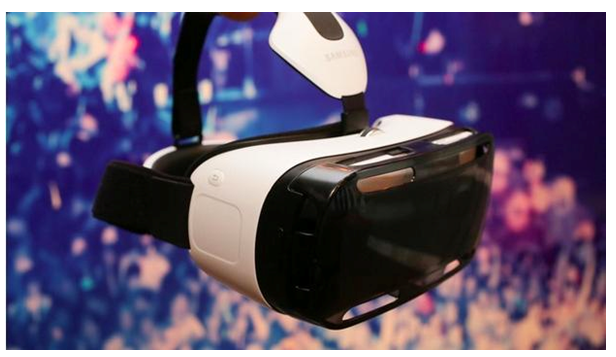
The medical-imaging industry is about to get a lot more “real.” New technologies coming to some hospitals and medical schools will allow doctors not only to see three-dimensional pictures produced by imaging equipment such as magnetic resonance imaging and ultrasound, but to interact with what is pictured—say, a heart or liver—as if it were real. Using devices such as virtual-reality viewers, as well as styluses or other hardware that provides a feeling of resistance, doctors will be able to take a tour of a patient’s brain, for example, and even…

Read More
Medical Tech 

New Radioactive Tracer Lights Up Brain’s Connections to Study Disorders

Various brain disorders change the physical nature of synapses in the brain, but this fact has been useless in clinical practice because evaluating these changes could only be done once the patient passes away. Now researchers at Yale University have developed a technique, published on in journal Science Translational Medicine, that relies on PET (positron emission tomography) and a novel tracer to image billions of synapses at the same time. Their radioactive tracer was engineered to grab onto the synaptic vesicle glycoprotein 2A (SV2A), which after injection can be viewed on a PET scanner.…

Read More
Transport Tech 

The World’s First 1,000-mph Car Has Been Unveiled

The world land speed record is in serious jeopardy. That’s because the Bloodhound SSC was unveiled to the world in its final form Thursday in London, and this supersonic chariot won’t just break the land speed record, it’s expected to obliterate it. The Bloodhound represents the collaborative efforts of more than 200 global companies as well as eight years of designing and manufacturing. The team’s efforts have yielded a rocket on wheels that could reach a speed of 1,000 miles per hour — shattering the current world record of 763 mph. The…

Read More
Medical Tech 

E. coli: The ideal transport vehicle for next-gen vaccines?

Most people recoil at the thought of ingesting E. coli. But what if the headline-grabbing bacteria could be used to fight disease? Researchers experimenting with harmless strains of E. coli — yes, the majority of E. coli are safe and important to healthy human digestion — are working toward that goal. They have developed an E. coli-based transport capsule designed to help next-generation vaccines do a more efficient and effective job than today’s immunizations. The research, described in a study published today (July 1) in the journalScience Advances, highlights the capsule’s…

Read More
IT 

A Brainy New Chip Could Make Computers More Like Humans

What’s the News: Researchers at IBM have developed a new “cognitive computing” microchip inspired by the brain’s computational tricks. These new chips, the researchers say, could make processors that are more powerful and more efficient than today’s computers—and better at the flexible learning and responses that are a struggle for current AI systems but a breeze for the human brain. How the Heck: IBM has made two prototypes of the new chip, which it calls a “neurosynaptic core.” Both are built on a standard semiconductor platform with 256 “neurons,” the chip’s computational components.RAM units…

Read More
Medical Tech 

Power Generator Harnesses Body Heat to Energize Medical Devices

As body-worn and implanted medical devices are continuing to proliferate, the need to utilize power from something other than batteries increases. Researchers from Huazhong University of Science and Technology developed a wearable flexible device that can produce electricity from body heat.   The device relies on two gel electrolytes, allowing the final device to be flexible and produce as much as 0.7 volts and 0.3 µW. Since the system works using the thermogalvanic effect, the higher the difference between the body temperature and the environment, the greater the voltage. While…

Read More
IT 

Wi-Fi 802.11ac wave 2 certification improves multi-device support

As the number of devices connected to our home, work and school wireless networks continues to grow, and with increasing demands from things like 4K video streaming, the Wi-Fi Alliance is working to make sure the Wi-Fi standard keeps apace with ever higher high-bandwidth demands. The “wave 2” upgrade to 802.11ac brings with it better multitasking, double the channel bandwidth and extended support for 5 GHz connections. One of the most anticipated features wrapped up in the latest upgrade is Multi-User Multiple Input Multiple Output (MU-MIMO) support, which allows more…

Read More
IT 

Quantum Memory Record Broken in Quest for Super-Fast Computers

Most record-breakers eke ahead of previous record-holders by fractions of a second. This was not one of those cases. Before now, the record for storing quantum data at room temperature was two seconds. One. Two. Done. But researchers in Canada announced they’ve now hit 39 minutes. That’s right—they’ve raised the bar from 2 seconds to 39minutes. Today’s quantum computers have to be frozen to function—negative 452.2 degrees Fahrenheit—so the challenge was to store the information when the computer was cold, warm it up to room temperature (77 degrees F—a temperature more…

Read More