IT 

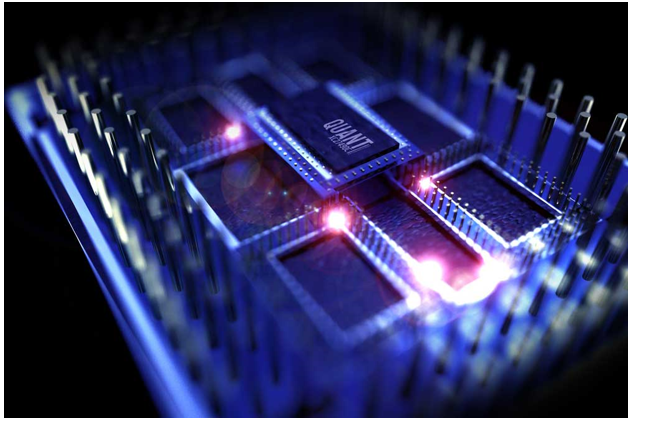
Quantum Memory Record Broken in Quest for Super-Fast Computers

Most record-breakers eke ahead of previous record-holders by fractions of a second. This was not one of those cases. Before now, the record for storing quantum data at room temperature was two seconds. One. Two. Done. But researchers in Canada announced they’ve now hit 39 minutes. That’s right—they’ve raised the bar from 2 seconds to 39minutes. Today’s quantum computers have to be frozen to function—negative 452.2 degrees Fahrenheit—so the challenge was to store the information when the computer was cold, warm it up to room temperature (77 degrees F—a temperature more…

Read More

IT 

MIT’s Swarm chip architecture boosts multi-core CPUs

For nearly 10 years, computer processors have been getting faster by using multiple cores rather than raising their individual speeds. This measure makes our PCs and smartphones more power-efficient, but also makes it much trickier to write programs that take full advantage of their hardware. Swarm, a new chip design developed at MIT, could now come to the rescue and unleash the full power of parallel processing for up to 75-fold speedups, while requiring programmers to write a fraction of the code. Developed by Prof. Daniel Sanchez and team, Swarm is…

Read More
IT 

Top 5 Medical Technology Innovations

Against the backdrop of health care reform and a controversial medical device tax, medical technology companies are focusing more than ever on products that deliver cheaper, faster, more efficient patient care. They are also making inroads with U.S. Food & Drug Administration regulators to re-engineer the complex review and approval process for new medical devices. Many in the industry have long felt overly burdened by what they consider to be an unnecessarily complex approval process. Critics claim it impedes innovation and delays the availability of better health care. To change…

Read More
IT 

Net neutrality win: US FCC reclassifies broadband as a public utility, bans internet “fast lanes”

The United States Federal Communications Commission (FCC) today voted 3-2 to uphold the principles of network neutrality – that is, to force Internet Service Providers (ISPs) to treat all web traffic as equal. This prevents ISPs from being able to throttle or block users’ connections to certain websites, or to offer “Internet fast lanes” whereby large websites could pay for their content to be delivered at a higher speed. Open Internet advocates see this as a huge step to protect the internet’s current status as a free and open platform…

Read More
IT 

Crucial Hurdle Overcome in Quantum Computing

The significant advance, by a team at the University of New South Wales (UNSW) in Sydney appears today in the international journal Nature. “What we have is a game changer,” said team leader Andrew Dzurak, Scientia Professor and Director of the Australian National Fabrication Facility at UNSW. “We’ve demonstrated a two-qubit logic gate – the central building block of a quantum computer – and, significantly, done it in silicon. Because we use essentially the same device technology as existing computer chips, we believe it will be much easier to manufacture a full-scale…

Read More
IT 

SOCIETY’S TOUGHEST REALITIES GO VIRTUAL: EXPLORING ACTIVISM THROUGH VR AT TRIBECA 2016

Virtual reality is creating new opportunities across the media landscape, not only for film directors but also journalists, activists, and multimedia artists. Its creators are often all three—they’re ambitious storytellers who aren’t afraid to cross media borders and test the possibilities of the latest technologies. For its Storyscapes competition and Virtual Arcade, the Tribeca Film Festival will return to the Tribeca Festival Hub, a multimedia destination where the public can experience the newest experiments in digital creation and the vast potential for immersive media experiences. Four of the projects included in this year’s innovative…

Read More
IT 

NEW SOLAR CHARGER FOR LAPTOP COMPUTERS

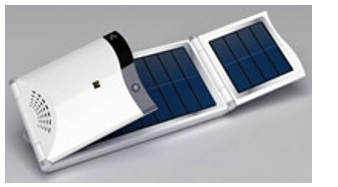
Now we can have a green charger for our computers and laptops. We can take our laptops to outdoors and keep on using them without bothering that the charge will run out. Muzatch offers a solar charger for our computers. It is known as the MZH-SP-6500 / SP-6000 renewable energy charger. If one is traveling long distance in a car, or going on a business trip or in the wilderness and needs emergency power for laptop, this solar charger will come handy. Muzatch claims that their solar charger can charge 95% of…

Read More
IT 

Quantum Computers are coming. The World Might Not Be Ready.

Quantum mechanics, Carl Sagan once observed, is so strange that “common sense is almost useless in approaching it.” Scientists still don’t understand exactly why matter behaves as it does at the quantum level. Yet they’re getting better at exploiting its peculiar dynamics — in ways that may soon upend the technology business. One of the most interesting applications is in computing. In theory, quantum computers could take advantage of odd subatomic interactions to solve certain problems far faster than a conventional machine could. Although a full-scale quantum computer is still…

Read More
IT 

Google’s Project Loon balloons to cover Sri Lanka with internet access

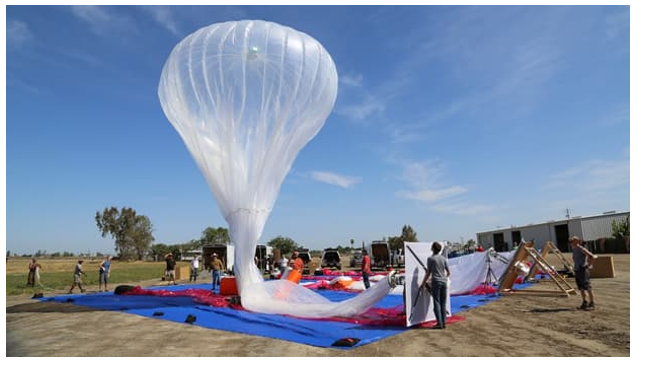
Bringing internet to remote regions by sending internet-enabled balloons into the stratosphere sure sounds like a wild idea, but it’s about to become a reality for the resident of Sri Lanka. The government of the island nation has just announced a partnership with Google that will bring affordable high-speed internet access to every inch of the country using the company’s Project Loonballoons. Project Loon wouldn’t really be at home anywhere other than the Google X lab, the company’s secretive research arm from which all manner of left-field ideas have emerged, including glucose-monitoring…

Read More
IT 

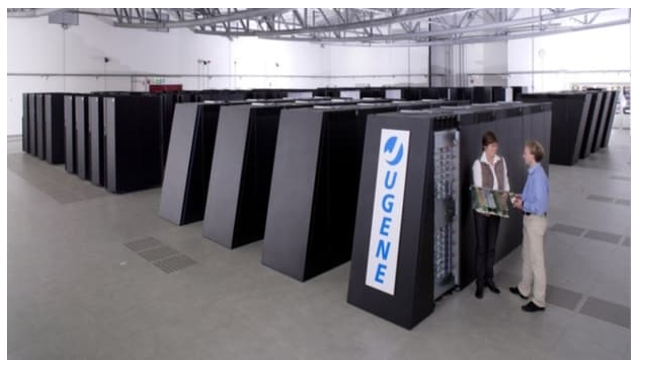
Home PC outperforms a supercomputer in complex calculations

The GPU in your gaming rig performs crazy amounts of calculations to really bring to life the Cyberdemon in the new Doom, but scientists are increasingly applying that power to more academic pursuits. Russian physicists have put a computer running a consumer-level Nvidia GPU to work on equations that are normally performed using a powerful supercomputer, and found that the home PC solved them in 15 minutes – far faster than the supercomputer’s time of two or three days. A GPU is designed with multiple threads of processing power, which allows…

Read More