IT 

9 Industries Using Virtual Reality

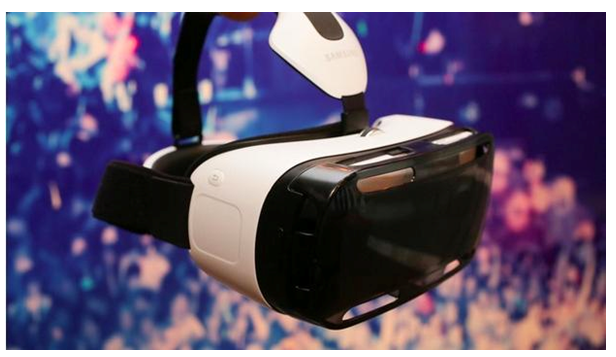
Virtual reality has been tied to gaming for a while, but as the technology progresses, more and more uses are surfacing. It’s being used in many industries in various capacities, very often involving job training or new ways of introducing an audience to a concept or experience. Below are 10 different industries that are using virtual reality and how they’re incorporating it into everyday life. Healthcare Virtual reality has multiple applications for healthcare. One use, which is actually not brand new, is the use of VR in therapy. For example,…

Read More

IT 

New device lengthens the life of quantum information

Yale University scientists have reached a milestone in their efforts to extend the durability and dependability of quantum information. For the first time, researchers at Yale have crossed the “break even” point in preserving a bit of quantum information for longer than the lifetime of its constituent parts. They have created a novel system to encode, spot errors, decode, and correct errors in a quantum bit, also known as a “qubit.” The development of such a robust method of Quantum Error Correction (QEC) has been one of the biggest remaining…

Read More
IT 

10 Ways Virtual Reality Is Revolutionizing Medicine and Healthcare

When people experience virtual reality for the first time, a common reaction is to start imagining all the different uses the technology might hold. Even within one industry, healthcare, the potential is open-ended. The good thing is that scientists and medical professionals have been at the drawing board for years now, developing and implementing virtual reality in ways that can help them train, diagnose, and treat in myriad situations. Here are just ten of the use cases that are currently in practice and continually developing as the technology itself develops…

Read More
IT 

Facebook Is Ready To Replace TV News

For some, scrolling through a Facebook News Feed is the modern day equivalent of clicking through television channels with a remote control. That analogue is about to become a bit more explicit: ABC News announced Monday morning that it will use the social network to stream live video coverage of the 2016 presidential election 24 hours a day during the Republican andDemocratic National Conventions. ABC will program video content specifically for audiences on Facebook. On Monday, for example, ABC’s “This Week” broadcast a live, 12-minute interview with Trevor Noah of “The Daily Show” via the social network. Facebook…

Read More
IT 

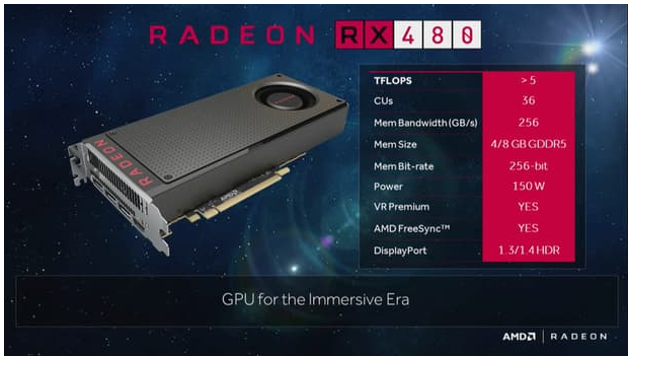
AMD’s new Radeon RX 480 GPU aims to make VR affordable

Getting VR-ready requires a pretty beefy rig, and there’s usually an equally-beefy price tag attached. AMD is looking to lower that barrier with the US$199Radeon RX 480 graphics card. That $199 will net you the 4GB edition of the Radeon RX 480, which AMD says packs the punch of a $500 GPU in terms of VR performance. With this price point the company hopes to drive up adoption rates of VR, encourage developers to create more content for the platform and drive down the costs of VR-ready computers and equipment.…

Read More
IT 

New detector overcomes key challenge in using light for wireless communications

Today’s high-speed wired communication networks use lasers to carry information through optical fibers, but wireless networks are currently based on radio frequencies or microwaves. In an advance that could one day make light-based wireless communications ubiquitous, researchers from Facebook Inc.’s Connectivity Lab have demonstrated a conceptually new approach for detecting optical communication signals traveling through the air. The team described the new technology, which could pave the way for fast optical wireless networks capable of delivering internet service to far-flung places, in Optica, The Optical Society’s journal for high impact research.…

Read More
IT 

Applications of Nanoparticles in Biology and Medicine

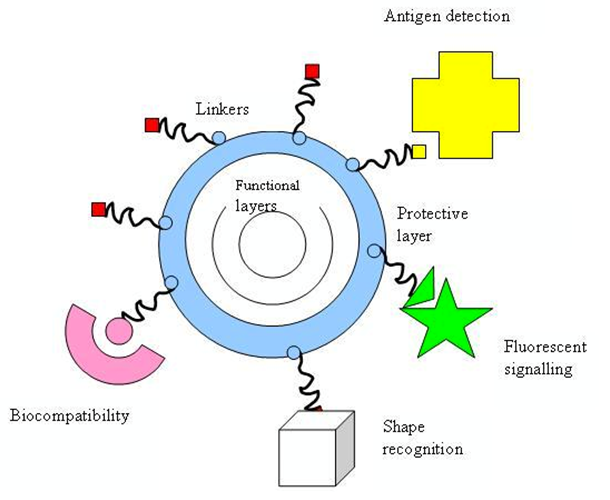
Nanotechnology [1] is enabling technology that deals with nano-meter sized objects. It is expected that nanotechnology will be developed at several levels: materials, devices and systems. The nanomaterials level is the most advanced at present, both in scientific knowledge and in commercial applications. A decade ago, nanoparticles were studied because of their size-dependent physical and chemical properties [2]. Now they have entered a commercial exploration period [3,4]. Living organisms are built of cells that are typically 10 μm across. However, the cell parts are much smaller and are in the…

Read More
IT 

Virtual Reality Is Coming to Medical Imaging

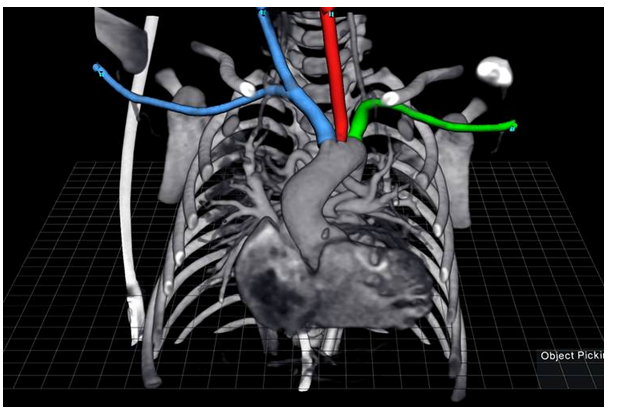
The medical-imaging industry is about to get a lot more “real.” New technologies coming to some hospitals and medical schools will allow doctors not only to see three-dimensional pictures produced by imaging equipment such as magnetic resonance imaging and ultrasound, but to interact with what is pictured—say, a heart or liver—as if it were real. Using devices such as virtual-reality viewers, as well as styluses or other hardware that provides a feeling of resistance, doctors will be able to take a tour of a patient’s brain, for example, and even…

Read More
IT 

A Brainy New Chip Could Make Computers More Like Humans

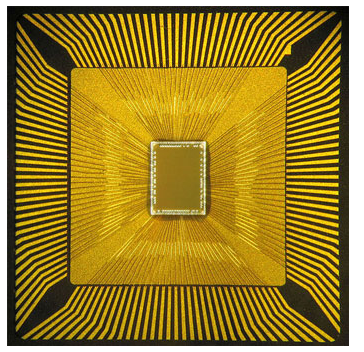
What’s the News: Researchers at IBM have developed a new “cognitive computing” microchip inspired by the brain’s computational tricks. These new chips, the researchers say, could make processors that are more powerful and more efficient than today’s computers—and better at the flexible learning and responses that are a struggle for current AI systems but a breeze for the human brain. How the Heck: IBM has made two prototypes of the new chip, which it calls a “neurosynaptic core.” Both are built on a standard semiconductor platform with 256 “neurons,” the chip’s computational components.RAM units…

Read More
IT 

Wi-Fi 802.11ac wave 2 certification improves multi-device support

As the number of devices connected to our home, work and school wireless networks continues to grow, and with increasing demands from things like 4K video streaming, the Wi-Fi Alliance is working to make sure the Wi-Fi standard keeps apace with ever higher high-bandwidth demands. The “wave 2” upgrade to 802.11ac brings with it better multitasking, double the channel bandwidth and extended support for 5 GHz connections. One of the most anticipated features wrapped up in the latest upgrade is Multi-User Multiple Input Multiple Output (MU-MIMO) support, which allows more…

Read More